
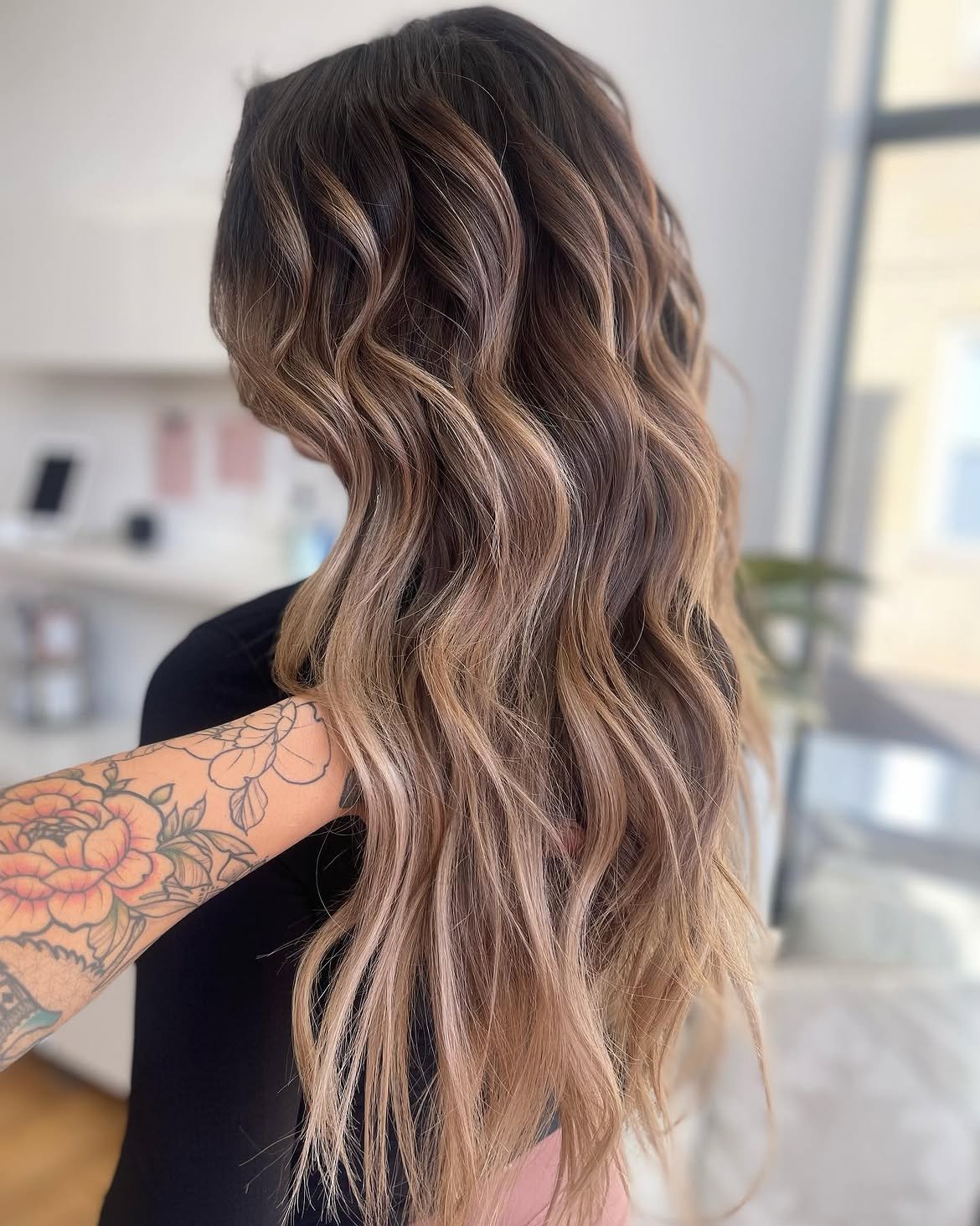
“Balayage” gets used a lot in hair color conversations, but it’s often confused with foil highlights — or treated as an interchangeable term for “getting lighter.” They’re actually two distinct techniques with real differences in application, look, and how often you’ll be back in the chair. Here’s what sets them apart, backed by the numbers that actually matter when you’re deciding.
How Each Technique Is Applied
Foil highlights are sectioned and wrapped in foil, with lightener applied from a specific starting point (often close to the root) straight through to the ends. The foil helps create stronger, more controlled lift, which is why highlights tend to look brighter and more uniform than balayage.
Balayage is hand-painted freehand directly onto the surface of the hair, without foil. Because the stylist is painting rather than wrapping, the lightener naturally goes on more heavily toward the ends and softens as it moves up toward the root — mimicking the way hair actually lightens in the sun.
Why the Regrowth Looks So Different
This is the difference most people actually care about. Because foil highlights start lightening closer to the root in a defined pattern, the regrowth line becomes visible faster and more distinctly as your natural hair grows in — generally within 4 to 6 weeks. Balayage’s soft, hand-painted placement means there’s no hard line to grow out, which is why balayage tends to stretch significantly longer between full color visits, often 12 to 16 weeks, with an optional gloss refresh around the 6 to 8 week mark to keep tone fresh in between.
Pros and Cons at a Glance
Highlights
- Pro: Brighter, more uniform, more dramatic contrast
- Pro: Well-suited to shorter styles where regrowth is less of a factor
- Con: More frequent touch-ups needed as regrowth becomes visible sooner
- Con: Root line can look dated if appointments are pushed back
Balayage
- Pro: Soft, natural-looking dimension with no harsh regrowth line
- Pro: Fewer full-color visits needed per year
- Con: The freehand technique is more skill-dependent — results vary more by stylist experience
- Con: A single session can be a larger time and cost investment upfront than a single highlight session, even though the annual visit count is usually lower
What It Generally Costs
Based on typical national salon ranges (not a quote for any specific salon — actual pricing depends on hair length, density, and your stylist’s experience):
- Traditional highlights: roughly $20–$150 per session depending on partial vs. full head
- Babylights (finer, more subtle highlights): roughly $55–$350
- Balayage: roughly $70–$450+ depending on length and how much lightening is involved
Because balayage visits happen less often, many clients find the annual cost comparable to highlights, even though a single balayage session can cost more upfront.
Which One Should You Choose?
If you want maximum, uniform brightness and don’t mind more frequent touch-ups, foil highlights (or a heavier balayage/highlight combination) might be the better fit. If you want lower-maintenance, natural-looking dimension that grows out gracefully, balayage is generally the better match. Many stylists — including ours — will also combine the two: foils for extra brightness around the face, balayage through the rest for a softer overall blend.
Frequently Asked Questions
Does balayage work on dark hair? Yes — balayage can be adapted to nearly any starting color, though the amount of lift needed (and the number of sessions to get there safely) will depend on how dark your natural color is and how light you want to go.
Is balayage better for curly or wavy hair? Balayage’s soft, blended placement tends to read especially well on textured hair, since the movement of curls and waves naturally catches the dimension. Straight hair can show off the precision of foils more distinctly.
Can I switch from highlights to balayage later? Yes — this is a common transition, and your stylist can plan the placement to blend your existing highlights into a softer balayage pattern rather than starting over completely.
How do I keep balayage from turning brassy? A purple or blue-toned shampoo, minimizing hot tool damage, and a periodic gloss/toner refresh all help maintain a cool, fresh tone between full appointments.
Getting the Right Technique for Your Hair
At Authentic Strands, our Balayage service is built around exactly this kind of consultation — matching placement and lightening intensity to how much upkeep you actually want, not a one-size-fits-all formula. If you’re looking for the fundamentals instead — root touch-ups, base color, or a simple gloss refresh — our Hair Color page covers those foundational services.
Ready to see what balayage would look like on your hair? Book a consultation and we’ll build the right plan together.
See real color transformations: follow @authentic.strands or founder Nonia at @nonia.antidote on Instagram.